
Viet Nam
Industrial Park Status
Text by Saito Hiroshi
The 47th: Measures to Prevent Turnover of Vietnamese Executive Employees
1. Optimization of Salary and Compensation
- Regular Market Surveys: The job hopping market in Vietnam is active; many employees will switch jobs if a competitor offers a 10-20% salary increase. It is advisable to review salary standards every 6 months to 1 year.
- Performance-Linked Bonuses: Implement a bonus system based on individual results and company performance, rather than just a fixed salary. Executives, in particular, value the “link between contribution and reward.”
- Enhanced Welfare Benefits: Support such as medical insurance, family allowances, lunch subsidies, and transportation expenses can surprisingly boost satisfaction.
2. Clarification of Career Paths and Growth Opportunities
- Clarify Promotion Paths: Many executive employees feel anxious if their “future title and evaluation criteria” are unclear.
- Training & Overseas Training: Establishing short-term training in Japan or other countries, as well as management training, increases loyalty.
- Job Rotation System: Gaining cross-departmental experience helps them feel that the company is an “environment where they can work long-term.”
3. Improving Communication with Superiors and Management
- Bridge the “Distance” Unique to Japanese Companies: If Japanese bosses are the “directive type” or “silent type,” Vietnamese executives are likely to become dissatisfied.
- Conduct Regular 1-on-1 Meetings: Build relationships where work, career, and family matters can be discussed.
- A Culture of Listening: Vietnamese employees are highly motivated when their proposals are adopted.
4. 4. Transparency of Evaluation Systems
- Combine Quantitative and Qualitative Evaluation: Clarify how promotions and salary increases are determined.
- Eliminate Sense of Unfairness: Extreme differences in evaluation and treatment between Japanese and Vietnamese staff in the same position become a breeding ground for dissatisfaction.
- Example: “Japanese Manager ≒ Vietnamese Deputy Department Head” but with a large disparity in benefits → A cause for turnover.
5. Fostering Loyalty and Engagement
- To instill a sense of ownership (“This is my company”), value the following:
- Award systems (e.g., Best Manager of the Year)
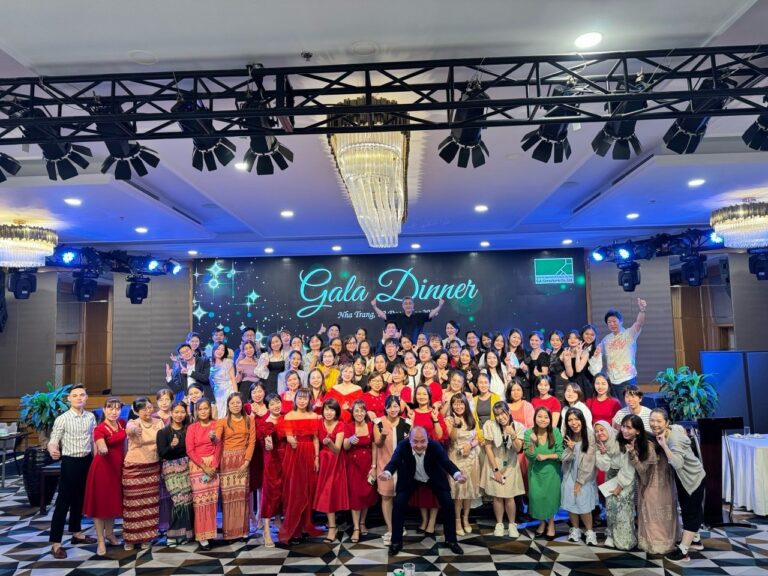
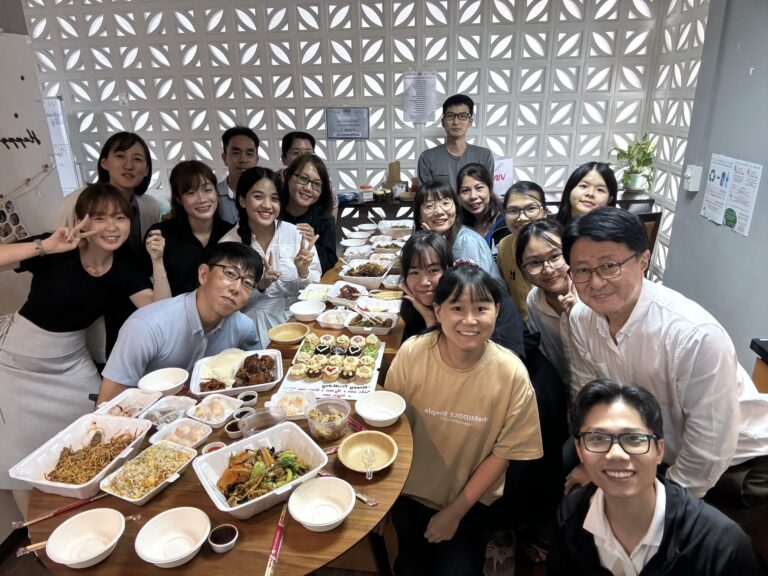
- Company trips and Team building
- Internal SNS and cultural events like birthday celebrations

6. Balancing Titles and Responsibilities
- If Vietnamese executives become “managers in name only,” stress will accumulate. → Delegate authority properly and allow them to be involved in decision-making.
- Conversely, increasing responsibilities without corresponding compensation and support also increases the risk of turnover.
Common Pitfalls
- Japanese bosses not delegating authority because “it takes time to build trust.”
- Promotion posts being filled entirely by Japanese staff.
- Pushing responsibility onto Vietnamese staff when problems arise.
- These issues spread quickly on social media and within the company,
leading to the departure of top talent.
Practical Examples (Successful Companies)
- Japanese Automotive Parts Manufacturer A:
- Introduced a “Future Factory Manager Candidate Training” system for the executive layer.
- Annual business trip to Japan + Events where families can accompany. → Executive turnover rate improved from 15% to 3%.
- European Electronics Manufacturer B:
- KPI + Bonus linkage system.
- Regular 1-on-1s + Sharing of promotion roadmaps. → Executive satisfaction rose to over 80%.
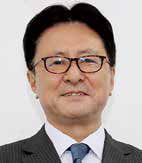
齊藤公(Saito Hiroshi)
Business Advisor
G.A. Consultants Vietnam Co., Ltd
After graduating from university, he joined a PHP research institute and served as the head of the New York office. He then worked on the “Nagoya Port Redevelopment Project” at a subsidiary of the Chubu Nippon Broadcasting (CBC) company. He later shifted his base to Asia, where he was involved in the launch of “FM96.3” in Singapore, and the creation of “Hello Vietnam” and “Invest Asia” magazines in Vietnam. He then joined BW Industrial Development JSC, Vietnam’s largest rental factory development company, where he was responsible for attracting Japanese manufacturing companies. Currently, he is active as a consultant for the entry of Japanese companies at “G.A. Consultants”, one of the longest-standing Japanese HR consulting firms in Vietnam.